

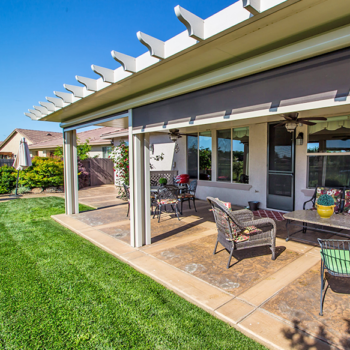
Suffolk Patios
A patio that lasts isn't decided by the pavers or the concrete stamp pattern. It's decided by what you don't see: excavation depth, base stone quality, compaction, drainage slope, and edge restraint. Cheap patio work in Suffolk often looks fine on day one, then starts to dip, separate, or hold water after the first stretch of heavy rain. A properly built patio stays flat, sheds water away from the home, and feels solid underfoot for years.
757 Fence & Deck builds patios in Suffolk with experienced contractors/builders, and we're licensed and insured. We install paver patios, stamped concrete patios, and flagstone/natural stone patios, and we'll walk you through what makes sense for your yard, how you use the space, and the surface you want to maintain.
Patios built to stay level in Suffolk
In Suffolk, the ground can change from one side of a yard to the other. Some areas drain quickly; others hold moisture and soften after storms. Those conditions are exactly why patio construction is more than placing stone on dirt. The goal is a finished surface that drains correctly, doesn't settle, and doesn't shift at the edges where movement usually starts.
A new patio is a good fit if you want a stable outdoor area for grilling, seating, dining, or a hot tub pad, and you're tired of muddy spots or uneven stepping stones. It's also the right fix when an older patio has started to rock underfoot, pool water, or spread apart at the joints. In those cases, the "repair" isn't cosmetic; it's rebuilding the support system underneath so the surface stops moving.
We start every job with a free estimate so you can make decisions with real information: what needs to be removed, how much excavation is required, where water should go, and which materials give you the best long-term result for your specific layout.
Choosing the right patio surface for how you live
The best patio material is the one that fits your maintenance tolerance, the look you want, and how you expect the surface to behave in sun, shade, and rain. We install three main patio types in Suffolk, and each one has clear tradeoffs.
- Paver patios give you a modular surface. If a section ever settles or gets damaged, individual pavers can be lifted and reset instead of tearing out the whole patio. Pavers also offer a lot of pattern options and border choices, and joints can be filled with polymeric sand to reduce weed growth and ant activity.
- Stamped concrete patios create a single, continuous slab with decorative texture and patterns. This is a strong choice when you want a unified look, clean edges, and easier sweeping. Because concrete is one piece, control joints and proper base prep matter to reduce random cracking and to keep the slab draining where it should.
- Flagstone/natural stone patios bring a more organic look and natural variation. The installation method and joint style change the feel of the finished surface. Natural stone also requires careful attention to thickness and seating so edges don't "lip" and create trip points.
If you're choosing between options, the decision usually comes down to how you want to handle future changes. If you expect you'll add on later, reroute a downspout, or change the shape, pavers tend to be easier to modify. If you want a single plane with minimal joint lines, stamped concrete is often the better match. If the priority is natural character, flagstone is hard to beat, but it needs skilled placement to feel comfortable to walk on.
How our Suffolk patio installations are built
Patio installs fail for predictable reasons: too little excavation, base stone that isn't compacted in lifts, edges that aren't restrained, and slopes that send water toward the house. Our process is designed to prevent those problems by controlling grade, compaction, and drainage from the start.
- Site check and layout. We confirm the patio footprint, finished height, and where water will drain. We also look at access for equipment and how the patio will meet existing surfaces like a threshold, steps, or a walkway.
- Excavation to the right depth. The depth depends on the system being installed, the base layers required, and the condition of the subgrade. Skipping depth is the fastest way to get settling later.
- Stabilization where needed. When soil conditions call for it, we use separation fabric and the right base materials to keep stone from migrating into the subgrade over time.
- Base stone installed and compacted in lifts. This is where the patio earns its strength. We place base stone in manageable layers and compact thoroughly so the surface doesn't "float" later.
- Final grading and drainage slope. Before the surface goes down, we confirm the pitch so water sheds away from the home and doesn't get trapped against edges.
- Setting the surface. For pavers, that includes the bedding layer, careful placement, cutting, and alignment. For stamped concrete, that includes formwork, reinforcement choices when appropriate, finishing, stamping, and control joints. For flagstone, that includes setting each piece to avoid rocking and uneven transitions.
- Lock-in and edge restraint. Paver patios rely on edge restraint to keep the field tight over time. Without it, joints open up and the patio starts to spread.
- Jointing and final detailing. We finish joints, clean the surface, and confirm the patio meets cleanly at borders, steps, and adjacent grades.
If you want a sealed finish for easier cleaning or color enhancement, we'll explain what sealing does (and what it doesn't). Sealers help with stain resistance and appearance, but they don't compensate for poor drainage or weak base prep.
Details that make or break a patio
Most patio problems show up at the edges, the low points, and the transitions to the house. These are the details we pay attention to on patios in Suffolk because they directly affect safety, maintenance, and how the patio ages.
- Water direction. A patio should shed water away from foundations and door thresholds. If water sits against the home, it doesn't just look bad; it can drive moisture into places you don't want it.
- Control joints and crack planning for concrete. Concrete cracks. The goal is to help it crack in planned locations, not wherever it wants. Layout, joint spacing, and subbase consistency all matter.
- Edge restraint on pavers. This is non-negotiable. Without restraint, pavers drift, joints widen, and sand washes out.
- Trip hazards. Lippage between units, lifted corners, and uneven transitions create a real safety issue, especially where people step out from a door or move chairs around.
- Cleaning and growth in shade. Patios that stay damp or shaded collect algae and grime faster. We'll talk through surface texture, joint choices, and maintenance habits that keep the patio easier to clean.
If you're comparing estimates, ask what's included under the surface: excavation depth, base stone type, compaction method, and how drainage is set. Two patios can look identical in the proposal line items but perform very differently once Suffolk weather and foot traffic start doing their work.
FAQ about patios in Suffolk
Can you build a patio over an existing concrete slab?
Sometimes, but it depends on the slab condition and drainage. If the slab is cracked, settled, or holds water, covering it often hides problems that keep getting worse. We'll inspect the slab and recommend the approach that prevents movement and pooling.
What's the difference in maintenance between pavers and stamped concrete?
Pavers usually need joint sand maintenance over time and occasional spot leveling if ground movement occurs. Stamped concrete is easier to sweep and doesn't have joints like pavers, but it benefits from proper cleaning and resealing when appropriate to maintain its finish and stain resistance.
How do you handle drainage on a patio that sits close to the house?
We set finished grade and slope so water moves away from the home, and we plan transitions at thresholds carefully. The right slope is subtle enough to feel comfortable underfoot while still moving water where it should go.
Can you match a new patio to an existing walkway or outdoor surface?
Yes. We plan the height, edge detail, and surface style so the new patio meets existing surfaces cleanly. With pavers, matching often comes down to selecting a compatible size and color blend. With concrete, it's pattern choice, border detail, and finish.
Do you offer financing for patio projects?
Yes. Financing is available, and we'll explain the options during your estimate so you can choose a patio design that fits your goals and your budget.
If you want a patio that feels solid every time you step onto it, the base, slope, and edges have to be treated as the project, not an afterthought. That's where experienced installation matters most, especially with the drainage and soil conditions we see in Suffolk.
Request a free estimate and we'll look at your space, talk through pavers vs stamped concrete vs natural stone, and give you a clear plan for a patio that fits your yard and holds up. We're licensed and insured, and we keep the scope focused on getting the construction details right so the finished patio stays that way.


