Chesapeake Fencing
In Chesapeake, fences take a beating from wet ground, humid summers, and wind-driven storms that test posts, hinges, and hardware. A fence that looks straight on install day can start leaning or dragging at the gate if it isn't laid out, set, and braced for the way local soil holds water and shifts after heavy rain. Good Fencing in Chesapeake isn't just picking a style. It's building a boundary that stays plumb, latches cleanly, and keeps doing its job season after season.
757 Fence & Deck installs and repairs residential and commercial fences in Chesapeake, with material options that fit privacy needs, security goals, and the realities of local weather. We're licensed and insured, and we provide free estimates so you can make a decision with clear scope and expectations. Financing options are also available for larger fence projects.
Fencing options for Chesapeake properties
The "right" fence depends on what you want it to do: keep kids and pets in, create privacy from the street, define a property edge, or control access for a business. Here are the fence types we build and what they're good at in Chesapeake conditions.
- Wood fencing (pressure-treated or cedar): Wood is the go-to for privacy and a traditional look. Pressure-treated posts and framing stand up better to moisture, and cedar is naturally resistant to decay. The key is building it so boards don't trap water against rails and so the bottom edge isn't buried where it stays wet.
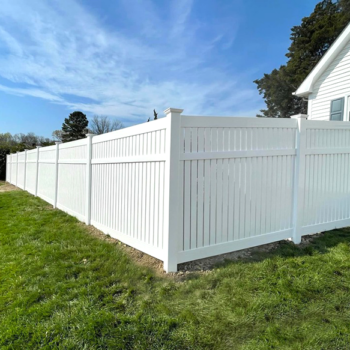
- Vinyl fencing: Vinyl is popular for low maintenance and a clean, consistent look. It won't rot, and you won't be staining it every few years. The tradeoff is that vinyl needs solid post setting and correct reinforcement where required, especially at gates and long runs that see wind load.
- Black aluminum fencing: Aluminum is a strong choice when you want a clean, open view while still creating a clear boundary. It's common around front yards and areas where you don't want a solid privacy wall. Proper anchoring and alignment matter because the eye catches wavy lines quickly on picket-style panels.
- Chain-link fencing (galvanized or vinyl-coated): Chain-link is practical for large areas, pets, and commercial spaces. Galvanized holds up well outdoors; vinyl-coated adds another layer of protection and a softer look. Tensioning, brace bands, and corner construction are what separate a fence that stays tight from one that sags.
- Commercial security add-ons: For commercial chain-link, we install security enhancements such as barbed wire, razor wire, and access control systems. These should be planned from the start so posts, top rails, and gates are built for the extra load and use. See our commercial fencing options for more details.
If you're balancing privacy with airflow, or you're dealing with an unusual lot line, we'll talk through what you want the fence to accomplish first. That keeps you from paying for features that don't solve your problem, or worse, ending up with a fence that creates a new one, like poor drainage along the line.
How our fence installs are built to last
A fence's lifespan is mostly decided before the first panel goes up. Layout, post setting, and gate construction do the heavy lifting. Here's how we approach fence installation in Chesapeake so the finished line looks right and works right.
- Site visit, measurements, and layout: We walk the perimeter with you, confirm where you want the fence and gates, and look for grade changes, soft ground, existing structures, and anything that will affect post spacing or panel choices. If you're uncertain about property lines, we'll tell you what we need to build to the line you intend, without guessing.
- Planning for rules and utilities: Fences can involve HOA requirements, visibility rules at corners, and permitting in some situations. Underground utilities also have to be identified before digging. We build the plan around these realities so the installation doesn't get stopped midstream.
- Post holes and setting: Posts are the foundation. We dig to appropriate depth and diameter for the fence type and site conditions, then set posts for strength and alignment. In wet or shifting ground, the way posts are set and braced makes a major difference in how the fence holds its line after rain and wind.
- Framework and panels: For wood fencing, rails and pickets are installed to keep the fence straight and reduce warping and movement. For vinyl, aluminum, and chain-link, the hardware and connections are installed to the system's requirements so panels don't rack or loosen over time.
- Gates that swing and latch cleanly: Most fence complaints come back to gates. We build and hang walk gates and driveway gates so they swing freely, latch securely, and resist sagging. That includes proper post support, hinge placement, and hardware selection for the weight and frequency of use.
- Final alignment and walkthrough: We check the line, gate operation, latches, and transitions, then walk the project with you so you know how it should operate and what to watch for over time.
Repair work follows the same logic. A quick patch rarely holds up if the root problem is a loose post, a washed-out footing area, or a gate opening that's out of square. We focus on the cause first, then rebuild the section so it doesn't fail again after the next stretch of heavy weather.
Common fence problems in Chesapeake and how we prevent them
Some fence issues are cosmetic. Others are early warnings that the structure is losing strength. In Chesapeake, moisture and wind often turn small issues into bigger ones if they're ignored.
- Leaning posts and wavy fence lines: Saturated soil can reduce the support around posts, especially after heavy rain. Preventing this starts with correct post setting and bracing at corners and gates, not just "straightening it later." Learn about our fence installation techniques that prevent leaning.
- Sagging gates: Gates fail when the hinge side isn't built to carry the load or when hardware isn't matched to the gate's weight. A sagging gate doesn't just look bad. It drags, damages hinges, and can pull the adjacent fence out of alignment.
- Wood rot and premature wear: Wood fencing lasts longer when it isn't trapping moisture at the bottom edge and when fasteners and connections are chosen for outdoor exposure. If you're staining or sealing, timing and surface prep matter, but the build details matter more.
- Chain-link slack and rattling: Loose fabric usually traces back to poor tensioning, weak corner assemblies, or worn hardware. Proper tension bars, brace bands, and corner posts keep the fence tight and quiet.
- Corroded hardware: Hinges, latches, and fasteners live outdoors. Hardware choice and installation keep gates operating smoothly instead of sticking, rusting, or loosening.
If you're seeing a fence lean, a gate that won't latch, or posts that feel loose when pushed, it's worth addressing early. Waiting often turns a focused repair into a larger replacement because the stress spreads along the line.
FAQ about fence installation and repair
Do I need to know my property line before you install a fence?
You should be confident in where you want the fence to go before construction starts. If a line isn't clear, we'll talk through your options so you don't build based on assumptions. The goal is a fence placed where you intend, with clean transitions at corners, easements, and gates.
Is it better to repair a leaning fence or replace it?
It depends on what's failing. If a few posts are loose but the rest of the structure is solid, targeted repairs can restore strength and alignment. If multiple posts are shifting, rails are deteriorating, or the fence line is out of square in several places, replacement is usually the smarter long-term move because the same forces will keep stressing weak sections.
What type of fence is best for wind and wet ground?
Durability comes from the build as much as the material. Vinyl, aluminum, wood, and chain-link can all perform well when posts, corners, and gates are constructed correctly. If your yard stays wet after rain or you're in an exposed area, we'll recommend a layout and structure that resists movement and reduces wind stress on long runs.
Can you add security features to a commercial chain-link fence?
Yes. We install commercial security enhancements for chain-link fencing, including barbed wire, razor wire, and access control systems. These should be planned with the gate design and post structure so the fence remains stable and operates correctly.
Do you offer estimates and financing for fencing in Chesapeake?
Yes. We provide free estimates for fencing in Chesapeake, and financing options are available for qualifying projects so you can move forward with the fence you need without forcing a smaller design that doesn't meet your goals.
If you want a fence that stays straight, works smoothly at the gates, and holds up to Chesapeake weather, we'll quote it clearly and build it with the structure it needs. Request a free estimate through our contact page, and we'll set a time to look at your property and recommend the fence style and build details that fit the way you'll use it.
757 Fence & Deck handles fence installation and fence repair for homes and commercial sites in Chesapeake, with wood, vinyl, black aluminum, and chain-link options. Tell us what the fence needs to do, and we'll take care of the layout, the build, and the finish so it functions the way a fence should. Check out our gallery for examples of our work.


