

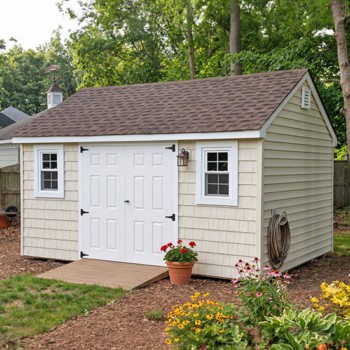
Suffolk Sheds
A shed that looks fine on day one can turn into a headache fast if the base is soft, the floor isn't supported, or the structure isn't anchored for wind and wet ground. Quality Sheds in Suffolk start with the parts you don't notice from the driveway: site prep, moisture control, framing choices, and door hardware that keeps working after hot summers and heavy rain. That's the difference between "cheap storage" and a shed you can actually use for years.
757 Fence & Deck builds custom sheds right here in Suffolk, from straightforward utility storage to purpose-built workshops and studios. You'll get a clear plan, a clean build, and a finished space that fits how you live and how Suffolk weather treats outdoor structures. Free estimates are available, and financing options are offered for customers who want to spread the project cost out.
Custom Sheds designed for Suffolk storage and work
Most people start shopping for a shed because the garage is full, tools are scattered, or outdoor equipment keeps getting dragged through the house. The right shed fixes that, but only if it's sized and laid out for what you actually own. A "10x12" on paper doesn't help if the doors are too narrow for a mower, or if shelving steals the walkway you need to turn a wheelbarrow.
Our shed builds in Suffolk are commonly planned around real use-cases:
- Utility and storage sheds for lawn equipment, seasonal items, bikes, and pool gear
- Workshop-style sheds where you need a solid floor, better lighting, and wall space for benches and tool storage
- Studio or hobby sheds where comfort upgrades matter, like insulation, extra windows, and a cleaner interior finish
Because we build custom, you're not locked into a cookie-cutter door location or window layout. If you need double doors for larger equipment, a ramp-friendly threshold, or interior framing that supports heavy shelving, those decisions get made before lumber is cut.
How shed installation works in Suffolk
A shed is only as good as its foundation and framing. In Suffolk, yards can hold water after storms, and heat and humidity are hard on untreated materials and poorly ventilated boxes. We approach shed installation as a small building project, not a kit drop-off.
Here's what the build process typically includes:
- Site walk and measurements to confirm access, door swing clearance, and how the shed will sit in the yard without creating drainage problems around it.
- Layout and base planning based on the shed's size and intended use. A basic storage shed and a workshop with heavy tools shouldn't sit on the same type of base.
- Base installation using the right approach for the location. Depending on the site, that can mean a compacted gravel pad, a framed base on skids/blocks, or a slab if you want a harder, cleaner floor surface.
- Floor framing built for load so the floor doesn't feel bouncy and doesn't sag over time. This matters if you're storing dense items like tool chests, gym weights, or stacked materials.
- Wall framing, sheathing, and weather detailing to keep the structure square and resist racking in high winds. Corners, openings, and fastening patterns are where cheap builds usually fail.
- Roof build and water management so runoff moves away from doors and walls instead of soaking the perimeter. Drip edges, overhang decisions, and roof pitch aren't "extras" if you care about longevity.
- Doors, trim, and hardware installed so doors don't bind and latches don't loosen after seasonal movement.
If your shed is planned as a workspace, we can also build in functional upgrades such as reinforced flooring, additional windows, insulation, and electrical hookups so it feels like a real work area instead of a dark storage box.
Materials and build details that hold up outdoors
In Suffolk, the details that protect a shed from moisture matter as much as the square footage. Warm, damp air finds its way into small structures. Without smart ventilation and good sealing around openings, you end up with condensation, musty smells, and warped doors.
During planning, we'll talk through choices that affect durability and daily use:
- Pressure-treated components where they belong (especially close to the base) to reduce rot risk where wood is most exposed.
- Ventilation so the shed can breathe. A sealed box traps humidity; a vented shed is easier on tools, paint, and stored materials.
- Door build and placement that match how you'll move items in and out. Wide doors are great, but they also need strong framing so they stay aligned.
- Window placement for daylight without turning the interior into a greenhouse. Extra windows help, but they must be flashed and trimmed correctly.
- Reinforced floors if you're rolling heavy equipment or building a bench setup. Fixing an underbuilt floor later is far harder than building it right at the start.
We're a licensed and insured contractor, and our builders treat sheds like the structures they are. That shows up in the straightness of the walls, how doors shut after the first hot season, and how the roof sheds water during the next heavy rain.
Planning, placement, and the mistakes that cost the most
People usually regret the same few shed decisions: placing it where water runs, choosing a base that sinks, or sizing it too small. A shed is easiest to do once, so it's worth slowing down at the planning stage.
Before you commit to a spot in your yard, we'll help you think through practical constraints:
- Drainage and grade: If runoff heads toward the shed, the bottom edge stays wet and the floor framing suffers. Even a great shed won't beat constant standing water.
- Access path: A shed doesn't help if you can't comfortably move equipment to it. Gates, tight turns, and soft ground matter.
- Setbacks and rules: Some properties have local requirements or neighborhood guidelines for accessory structures. If permits or approvals apply to your shed in Suffolk, they're easier to handle before construction starts.
- Power and comfort needs: If you're planning electrical hookups or insulation, that changes wall and ceiling decisions. Retrofitting later can mean opening finished surfaces.
A common "cheap shed" failure is skipping solid base prep. The shed looks level at install, then a corner settles and everything goes out of square. Doors start rubbing, windows don't operate smoothly, and you end up forcing hardware that was never meant to be forced. Building the base correctly prevents that chain reaction.
FAQ about Sheds in Suffolk
What type of shed base is best in Suffolk?
The best base is the one that stays level and keeps the floor system dry. For many yards, a properly compacted gravel pad works well. For heavier use, like a workshop with dense tools, a more structural base or a slab can make sense. The site's grade and how water moves across the yard decide this more than the shed's appearance.
Can you build a shed that works as a workshop or studio?
Yes. We build custom workshops and studio-style sheds, including options like reinforced flooring, added windows for daylight, insulation for comfort, and electrical hookups for tools and lighting.
How do I choose the right shed size?
Start with what has to fit through the door and what needs aisle space. Storage sheds feel "full" quickly once you add shelving. If you plan to work inside, allow room for a bench and a clear path to move materials without bumping everything else.
Do you offer financing for shed projects?
Yes. Financing options are available, and we can review them during your estimate so you can choose a structure and upgrade level that fits your budget.
Do you provide free estimates for sheds in Suffolk?
Yes. We provide free estimates in Suffolk, and we'll walk the site with you so the quote reflects real access, base needs, and the features you want.
If you're ready to stop juggling storage and want a shed that fits your property and your routine, we'll help you plan it from the ground up. Share what you want to store or build inside, where you'd like it placed, and any comfort upgrades you're considering, and we'll put together a clear shed plan and a free estimate.
Request a free estimate for a custom shed in Suffolk, and we'll take it from there.


