Chesapeake Concrete
Most concrete problems in Chesapeake show up the same way: a driveway that's spider-cracked and shedding grit, a patio that holds water after rain, a sidewalk panel that's lifted and now catches toes, or a new build that needs a clean, level pad that won't settle. Concrete is unforgiving when the base is soft or drainage is ignored, so the fix isn't just "pour new" and hope for the best.
757 Fence & Deck installs and replaces concrete in Chesapeake for homeowners and commercial properties that need a surface built for daily traffic, weather, and water. Expect straight talk on what should be repaired, what should be replaced, and what prep work actually matters. Free estimates are available, and financing options are offered for larger projects.
Concrete surfaces we install in Chesapeake
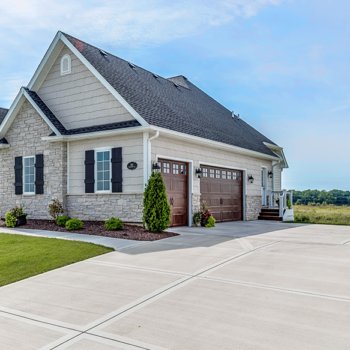
Good concrete starts with a clear purpose. A backyard patio should drain away from the house and feel comfortable underfoot. A driveway needs strength where vehicles turn and brake. A commercial entry or walkway needs predictable slopes and stable edges so it stays safer and easier to maintain.
We handle concrete projects in Chesapeake that typically include:
- Driveways that need full replacement due to widespread cracking, heaving, or surface scaling
- Patios designed for furniture, grills, and consistent drainage
- Walkways and sidewalks that connect doors, gates, parking areas, and outdoor spaces
- Concrete pads for sheds, outdoor equipment, trash enclosures, and other utility uses
- Approaches and small commercial slabs where clean edges and correct slope make daily use smoother
If you're dealing with one stubborn crack, the right answer might be targeted repair. If the slab is sinking, breaking apart, or sloped toward the structure, replacement is usually the only way to correct the underlying grade and rebuild the base the right way.
How we build concrete so it stays flatter, drains better, and cracks less
Concrete is strong in compression, but it's only as reliable as what's beneath it and how it's finished. Our concrete process in Chesapeake is built around controlling water, supporting the slab evenly, and guiding cracking where it belongs.
- Site walk-through and layout
We look at access, existing grades, where water currently runs, and how you use the space. Then we confirm the shape, edges, and any transitions to steps, doors, or existing pavement.
- Removal and subgrade preparation
If we're replacing old concrete, we break it out and haul it away. The soil beneath gets evaluated, reshaped, and compacted so the slab isn't riding on loose fill or organic material that will settle later.
- Base material and drainage planning
A stable base helps spread loads and reduces settlement. We also set the slope so rainwater moves off the slab instead of sitting on the surface or draining back toward buildings.
- Forms, reinforcement, and edge control
Forms keep lines straight and thickness consistent. Depending on the application, reinforcement can help manage movement and keep panels behaving as a unit. Edges and corners get extra attention because that's where chipping and breakdown often start.
- Pour, placement, and finishing
The pour is where timing matters. We place concrete evenly, consolidate it, strike it to grade, and finish it to match the intended use. A broom finish is common for traction; smooth finishes look clean but can be slick when wet if used in the wrong spot.
- Control joints and curing
Concrete cracks as it cures. Control joints are planned so those cracks form in clean, less visible lines instead of randomly across the slab. Curing is not optional. If concrete dries too fast, the surface can weaken and become more prone to dusting, scaling, and early cracking.
If a contractor skips the base, ignores slope, or rushes curing, the slab might look fine the day it's poured and still fail early. The goal is a surface that stays stable and predictable through seasons of wet weather and heavy use.
Stamped and decorative concrete for patios and entries
Stamped concrete gives you texture and pattern without switching to another surface material. It's a smart choice when you want a patio or entry area to look finished and intentional while still keeping the durability and cleanability of concrete.
Decorative work takes more planning than a plain slab because the appearance depends on consistent placement, timing, and finishing. Pattern alignment, edge details, and joint layout matter. A joint placed without thought can cut right through a focal area; a joint planned correctly blends into the design and still does its job controlling cracking.
Stamped concrete also benefits from the right protection plan. Sealing helps reduce moisture intrusion and staining, but it's not a one-and-done product. We'll talk through what to expect for maintenance so the finish keeps its traction and color over time, especially on patios that see regular sun, rain, and foot traffic.
Moisture and ground conditions that affect concrete in Chesapeake
Concrete work in Chesapeake has to respect water. Between rainfall, lawn irrigation, and natural drainage patterns on many properties, water will find the low spot. If that low spot is your patio, walkway, or driveway edge, you'll notice puddles, algae staining, and faster wear.
That's why grade and drainage details aren't "extras." They're part of a concrete install that performs:
- Slope away from structures so water doesn't collect against foundations or run toward doors
- Firm, uniform support so panels don't settle unevenly and create trip edges
- Joint placement that accounts for slab size and geometry, reducing random cracking
- Finishes chosen for traction in areas that stay wet or are regularly walked
If your existing slab is heaving or sinking, we'll focus first on what's driving the movement: downspout discharge, trapped water along an edge, soft soil, or an area that never drains. Fixing the slab without fixing the conditions is how the same problem returns.
Concrete questions that help you hire the right crew
Should I repair my concrete or replace it?
If cracks are isolated and the slab is still level with stable edges, repair can make sense. If the slab is tilted the wrong way, has widespread cracking, is spalling badly, or has multiple raised/sunken panels, replacement is usually the only way to correct the base and drainage.
How long before we can walk or drive on new concrete?
Concrete gains strength over time, not instantly. Light foot traffic is typically allowed sooner than vehicle traffic, and heavier use requires more curing time. We'll give you clear use guidelines for your specific pour so you don't leave tire marks or damage edges before the slab is ready.
Do you always use reinforcement?
Reinforcement depends on the slab's job and the ground conditions. Some areas benefit from added reinforcement to help control movement and keep panels performing together. We'll explain the choice during the estimate so you understand what's being installed and why.
Will stamped concrete be slippery?
Any hard surface can get slick when wet if the texture is too smooth for the location. For patios, pool-adjacent areas, and entries, we plan the finish and sealer approach to balance appearance with real traction.
What do you need from me before the crew starts?
We'll coordinate access, discuss where materials and debris will move, and confirm any surface features that need protection. If sprinklers, drain lines, or low-voltage wiring could be in the work area, identifying those early prevents surprises during excavation.
If you're ready to replace a failing slab or plan a new concrete surface in Chesapeake, start with a free estimate from 757 Fence & Deck. We'll look at drainage, grade, and how you use the space, then recommend a concrete plan that fits the property instead of forcing a one-size approach.
Request an estimate and ask about financing options if you're grouping a larger concrete project into your budget.


