

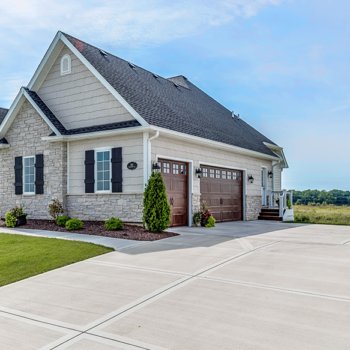
Virginia Concrete
The difference between concrete that stays flat for years and concrete that starts cracking, settling, or holding puddles usually comes down to what you can't see when the job is "done": base prep, reinforcement, drainage, and curing. A cheap pour hides shortcuts under a smooth surface. A qualified installer builds the slab from the ground up so it performs through Virginia's wet seasons, humid summers, and cold snaps that can push moisture in and out of the concrete.
757 Fence & Deck installs concrete in Virginia for residential and commercial properties, with an experienced builder's focus on layout, grading, and finish quality. We're licensed & insured, offer free estimates, and financing is available for larger projects where spreading payments helps.
Concrete installation details that matter in Virginia
Most concrete problems trace back to movement and moisture. In Virginia, heavy rain and saturated soil can soften subgrade and wash out edges. Humidity slows drying, while winter freeze-thaw cycles can turn trapped water into pressure that chips the surface. The best-looking finish won't last if the slab isn't supported and drained correctly.
Here's what a real install needs to include, and why it matters:
- Layout and slope: Concrete has to move water. We set grades so water sheds off the slab instead of pooling, and we plan transitions to existing surfaces so you don't end up with a trip edge or a low spot that stays wet.
- Excavation and base: We remove unsuitable material and build a compacted base that supports the slab. If the base is thin or loose, concrete settles and cracks in ways a patch won't truly fix.
- Forms and thickness control: Forms keep the edges straight and hold thickness where loads are highest. Corners and edges are where many shortcuts show up first.
- Reinforcement: Rebar, wire mesh, and/or fiber reinforcement are chosen based on the slab's size and use. Reinforcement doesn't "stop" cracks; it helps control how the slab behaves so cracks are tighter and less disruptive.
- Control joints: Concrete shrinks as it cures. Control joints give it a planned place to crack so you don't get random cracks across the middle of the work.
- Finishing and curing: Finishing is more than making it look smooth. Then curing keeps moisture in the slab long enough to gain strength. Rushing either step is how you get weak surface paste, dusting, or early wear.
Our process for concrete in Virginia
Concrete work goes fast on pour day, but the outcome is decided before the truck arrives. Our process stays focused on the parts that protect your investment.
- On-site estimate and measurements: We look at access, drainage, soil conditions, and how the new concrete ties into what's already there. You'll get a clear scope based on the slab's purpose, not a one-size guess.
- Plan the slab for use and loads: A light-use patio, a trash-pad, and a driveway apron don't ask the same things of concrete. We align thickness, reinforcement, and joint layout to how you'll actually use the space.
- Excavate, build the base, and compact: This is where long-term performance is won or lost. We compact in lifts where needed and shape the base so the slab is supported evenly, including at edges.
- Set forms, reinforcement, and joint plan: We place reinforcement correctly and keep it positioned so it does its job. Control joints are laid out intentionally so the slab "breaks" where it's least noticeable and least harmful.
- Pour and finish: We place the concrete, consolidate where needed, and finish to the right texture for the space. A broom finish adds traction for walkways and outdoor areas; a hard trowel finish is smoother but can be slippery outside if it's too slick.
- Cure and protect: Proper curing strengthens the slab and helps reduce surface issues. We'll also explain when it's safe to walk on, place heavy items, or drive on the new concrete so it doesn't get damaged early.
If your project is decorative, the schedule and steps change. Stamped concrete has to be timed tightly, and sealing needs to match Virginia conditions so the surface holds color and resists moisture intrusion.
Stamped and decorative concrete for patios and walkways
Stamped concrete gives you the look of stone, brick, or tile in a single slab, with fewer joints to collect weeds and settle unevenly. It's a good fit in Virginia when you want an outdoor surface that's easy to clean and can be sealed for stain resistance.
Decorative concrete demands more than a standard pour because the finish is the product. Details that affect the final look and long-term wear include:
- Subgrade flatness and consistency: Any base movement can telegraph through a patterned surface and draw your eye to low spots.
- Stamp timing: Stamping too early smears edges; too late makes the pattern shallow and uneven. This is where experienced installers earn their keep.
- Traction and edges: We plan texture so the surface isn't dangerously slick when wet, and we handle edges so the pattern doesn't look "cut off" at borders.
- Sealing: Sealer choice and application matter in Virginia's humidity. The goal is protection without trapping moisture or creating a surface that gets slick. We'll tell you what to expect for resealing based on use and exposure.
Stamped concrete isn't just about appearance. A properly detailed decorative slab still needs correct joints and drainage, because water finds every low spot and every weakness.
Common failure points we prevent
Concrete will crack. The goal is controlling where and how it cracks, and preventing the kind of movement that turns cracks into hazards. These are the issues we watch for on concrete projects in Virginia:
- Standing water: Puddles speed up surface wear, encourage staining, and can turn into freeze damage in winter. A small slope is cheap insurance.
- Edge settlement: Driveway and walkway edges break down when the base isn't compacted or when runoff erodes the side. That's how you end up with crumbling edges and a "dropped" corner.
- Random cracking from poor joint layout: If joints are missing or spaced wrong, the slab chooses its own crack line, often right through the most visible area.
- Surface scaling and flaking: Weak surface paste, overworking the finish, and early exposure to de-icing chemicals can damage the top layer. We focus on finishing and curing so the surface can handle Virginia weather.
If you're replacing existing concrete, we'll look at why it failed. Pouring new concrete over the same drainage problem usually repeats the problem, just with a fresh surface.
Concrete FAQs
How thick should concrete be for my project?
Thickness depends on what the slab will carry and how the base is built. A patio and a driveway don't have the same demands. During your free estimate in Virginia, we'll match thickness and reinforcement to actual use so you don't pay for guesswork or end up underbuilt.
How long before I can use new concrete?
You can usually walk on it sooner than you can park on it. The slab gains strength over time as it cures, so we'll give you clear guidance for foot traffic, furniture, and vehicles based on the install and conditions at your property.
Will my concrete crack?
Hairline cracks can happen as concrete shrinks and as temperature changes. What matters is crack control: proper base compaction, reinforcement, and a smart control-joint plan help keep cracks tighter and in less noticeable locations.
Do I need to seal outdoor concrete in Virginia?
Sealing is a strong option for stamped concrete and for slabs exposed to frequent water, staining, or de-icing products. The right sealer helps with stain resistance and weathering, and we'll explain what maintenance looks like for your specific surface.
Concrete is one of the few upgrades you'll walk and drive on every day, so the details pay you back. If you're planning a new slab or replacing failing concrete in Virginia, 757 Fence & Deck will measure the site, explain the build approach in plain language, and provide a free estimate. Contact us for more information. Financing is available when it helps you move forward with the right scope instead of the cheapest shortcut.


