Chesapeake Decks
A deck project should feel predictable: we start with a quick conversation about how you'll use the space, then we measure and inspect the area, confirm the layout and materials, and build the deck in clear stages until the final walkthrough. For Decks in Chesapeake, those early steps matter because moisture, heat, and fastener corrosion punish shortcuts. The goal isn't just a good-looking surface on day one. It's a deck that stays solid under foot, drains the way it should, and doesn't turn into a maintenance headache after the first tough season.
757 Fence & Deck is licensed and insured, and our contractors build and repair composite and pressure-treated wood decks right here in Chesapeake. We'll give you a free estimate, and financing options are available if you want to spread the project cost out instead of delaying the build.
Decks built for Chesapeake weather and wear
In Chesapeake, decks live outdoors year-round. That sounds obvious, but it affects every choice: framing lumber, fasteners, spacing, drainage, and where the deck connects to the house. A deck that looks "straight" on install day can start to feel bouncy, uneven, or squeaky when the structure underneath wasn't treated as the real job.
We build and repair decks with an eye on the details that keep them stiff and safe:
- Solid structure first: beam and joist layout that supports real foot traffic, furniture, and grills without soft spots.
- Moisture control: planning for water to move off the surface and away from the framing, instead of trapping it where rot starts.
- Safe edges and transitions: stable stairs, secure handrails, and clean tie-ins where people step in and out of the house.
If you're replacing an older deck, we don't assume the existing footprint is automatically the best layout. Sometimes a small change, like stair placement or board direction, makes the deck easier to use and easier to maintain without changing the whole yard.
How a typical deck job unfolds (and what we verify)
The deck surface is what you see. The inspection and layout work is what keeps it from becoming a call-back project. Here's how we run deck work in Chesapeake so the build stays controlled from start to finish.
- On-site measure and condition check: We look at access, grade, drainage patterns, and the connection point at the home. If there's an existing deck, we check for soft framing, corroded fasteners, shaky rails, and stair issues.
- Plan the footprint and height: Deck height affects step count, rail requirements, and the feel of the space. We confirm where people will naturally walk, where furniture will sit, and how doors swing so the finished deck doesn't feel cramped.
- Material and fastening decisions: Composite and pressure-treated decking behave differently. We match the product to how much maintenance you want, how much direct sun the deck gets, and what kind of foot traffic you expect.
- Permit/code coordination: Decks have structural and safety requirements. We build to local code expectations in Chesapeake so the deck isn't just "carpentry," it's a safe exterior structure.
- Build in stages you can see: layout, footings, framing, decking, rails/stairs, then cleanup and a final walkthrough. If we uncover hidden damage during a repair or rebuild, we show you what we found and keep scope changes clear.
That sequence prevents common headaches like a deck that holds water, boards that loosen prematurely, or a rail that feels fine until someone leans on it at the wrong moment.
Choosing the right decking: composite vs. pressure-treated wood
We build decks in Chesapeake with both composite and pressure-treated wood, and the "best" choice depends on how you live and how you maintain your exterior spaces.
Pressure-treated wood is a practical option when you want a traditional look and you're comfortable keeping up with periodic cleaning and protective finishes. Wood can also be easier to modify later if you decide to add a step, change a stair run, or adjust an edge detail. The tradeoff is that it moves with weather. Boards can cup or check, and fasteners need to be chosen and installed with care so the surface stays tight and comfortable.
Composite decking is popular for homeowners who want a consistent surface and less routine upkeep. It resists many of the issues that make wood feel rough over time, but it still needs a proper frame underneath and correct spacing so it drains and expands the way it's designed to. Composite also holds heat differently in direct sun, which matters if your deck faces long afternoon exposure.
Under either surface, the frame and hardware choices do a lot of the real work. In coastal Virginia conditions, corrosion resistance matters. Using the right connectors and fasteners isn't an "upgrade," it's how the deck stays secure and quiet season after season.
Deck repair vs. rebuild: what we look for on Chesapeake properties
Not every worn deck needs a full replacement. At the same time, resurfacing over a compromised frame is one of the fastest ways to spend money twice. When we assess deck repairs in Chesapeake, we focus on the structure first and the cosmetics second.
Common signs a deck needs more than a few swapped boards:
- Spongy or springy areas: often tied to weakened joists, undersized framing, or loose connections.
- Rot at posts, ledgers, or stair stringers: those aren't "one-board" problems; they're load-path problems.
- Wobbling rails or loose newel posts: a safety issue that should be addressed immediately, not "next season."
- Rusting hardware and fastener stains: corrosion can be a warning that connections are weakening under the surface.
- Persistent puddles on the deck surface: can point to layout/slope issues or spacing that doesn't let the deck drain.
If the frame is sound, targeted repairs can extend the life of the deck and improve safety quickly. If the frame is compromised, a rebuild is usually the cleaner path because it lets us correct the structure, the attachment details, and the stair geometry instead of patching around them.
FAQ about deck building in Chesapeake
Do you handle both new deck builds and deck repairs in Chesapeake?
Yes. We build new decks and handle repairs, including composite and pressure-treated wood deck work. The best starting point is an on-site look at the framing and the connection points so the recommendation is based on what's actually there.
What usually causes premature deck problems in this area?
The most common issues come from trapped moisture, undersupported framing, and corroding connectors or fasteners. You often don't see the problem until boards loosen, rails wobble, or a "small soft spot" turns into widespread rot.
Can you match a new deck surface to an existing frame?
Only if the frame is in good shape and built appropriately for the surface you're installing. We inspect the framing, spacing, and attachment details first. If the structure doesn't meet the needs of the new decking, we'll tell you what has to change so the surface performs the way you expect.
Do you offer financing for deck projects?
Yes. Financing options are available, and we also provide free estimates so you can make a decision with clear scope and material choices in front of you.
If you're ready to stop dealing with soft boards, shaky rails, or a deck layout that doesn't fit how you use your yard, we'll walk the site and put together a clear plan for a deck build or repair in Chesapeake. Request a free estimate through our contact page, and we'll take it from measurements to a finished deck you can rely on.
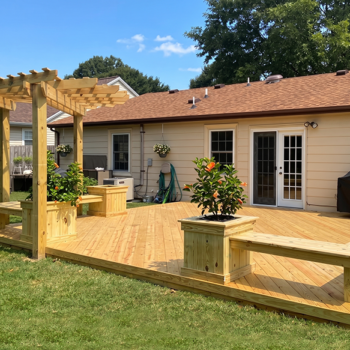
Check out our gallery to see examples of our quality deck work and other projects we've completed in Chesapeake.


