

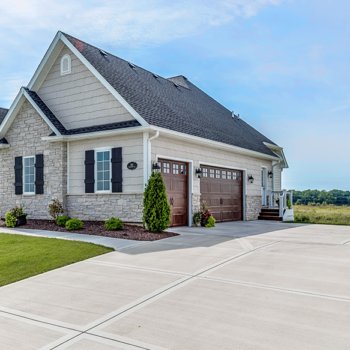
Suffolk Concrete
Done right, concrete gives you a flat, stable surface that drains the way it should, supports the weight it's meant to carry, and keeps looking clean instead of breaking up at the edges. That's what people want from concrete in Suffolk: a driveway that doesn't hold puddles, a patio that stays level under furniture, a walkway that feels safe in the rain, and a pad that doesn't crumble the first time it sees real use.
757 Fence & Deck handles concrete projects right here in Suffolk for both residential and commercial properties, including decorative and stamped concrete work. We focus on the parts that decide how long the slab lasts: the base, the thickness, reinforcement, drainage, control joints, and curing. Those details don't show much on day one, but you'll notice them quickly when a slab settles, heaves, or starts cracking in the wrong places.
If you're planning a new pour or replacing old concrete, we'll start with a free estimate and talk through the use-case first. A light-duty patio and a vehicle driveway shouldn't be built the same way, and "good enough" finishing can turn into slippery spots, scaling, or a surface that's hard to keep clean.
Concrete installation details that hold up in Suffolk
A lot of concrete problems get blamed on the mix, but most are caused before the truck shows up. In Suffolk, where rain and damp ground conditions are common, the base and drainage plan matter as much as the pour itself. Our approach is to build the slab from the ground up so the concrete has uniform support and consistent thickness.
- Site prep and grading: We confirm where water will run, then grade so the finished surface sheds water away from structures and doesn't create low spots. If you've ever had a patio that always stays wet in one corner, that's usually slope and base work, not "bad concrete." See our patios page for more about outdoor surface preparation.
- Base material and compaction: Concrete needs a stable, compacted base to reduce settling. We look at soft areas, fill needs, and compaction so the slab doesn't end up bridging over weak spots that later sink.
- Forming for straight lines and true edges: Forms control the slab's shape and thickness. If forms bow or shift during placement, you get thin sections and weak edges that chip and break down faster.
- Reinforcement where it makes sense: Depending on the slab's purpose, reinforcement can help control crack movement and add strength across weak points. We'll explain options clearly so you understand what you're paying for and where it actually helps.
- Control joints and layout: Concrete cracks. The goal is to encourage cracking to happen in planned locations, using joint spacing and depth that match the slab's size and thickness. Poor joint planning is why you see random diagonal cracks cutting across an otherwise good-looking slab.
- Finishing for traction and durability: The finish isn't just cosmetic. A broom finish adds grip for walkways and pool-adjacent areas. Trowel finishing has a different look and feel but needs to be done correctly to avoid surface issues later.
- Curing and protection: Early curing affects strength and surface durability. We'll give clear guidance on how long to keep traffic off, when it's safe to place heavy items back, and how to protect the surface during the first critical days.
We also pay attention to transitions and tie-ins: garage floors meeting driveways, sidewalks meeting steps, and the way slabs meet existing concrete. These seams are where water works in first if the height and slope aren't set correctly.
Stamped and decorative concrete for outdoor living
Decorative concrete is popular in Suffolk because it can give you the look of stone or pavers with a single, solid slab. 757 Fence & Deck installs stamped and decorative concrete, including stamped concrete patios, where pattern and color are part of the design, not an afterthought.
Stamped work raises the bar on preparation and timing. The surface has to be placed and finished to the right stage before stamping, edges need clean definition, and pattern layout has to be planned so it doesn't end with awkward cuts at doors, steps, or borders. If layout is rushed, you'll see it every time you walk outside.
Decorative concrete also changes the maintenance conversation. Sealers can help protect color and make the surface easier to clean, but sealer choice and application matter. Too much sealer, the wrong product, or sealing at the wrong time can create a cloudy look or reduce traction when wet. We'll explain what maintenance looks like for your specific patio or walkway so you're not surprised later.
If you're deciding between a standard broom-finish slab and a stamped surface, we'll talk through how you'll use the space. A grilling area, outdoor dining, or a high-traffic entry path all benefit from slightly different finish choices and joint layouts. The goal is a surface that fits your daily use, not just a photo.
How to choose the right concrete for the job
"Concrete" covers a lot of ground, so the smartest first step is matching the build to the load and the environment. A backyard patio, a driveway approach, a commercial walkway, and an equipment pad don't share the same priorities.
- Driveways and parking areas: Thickness, edge strength, and base compaction are key because vehicles concentrate load at tires and turn points. Joint placement matters at corners and where the driveway meets the street or apron.
- Patios and walkways: Drainage and finish selection usually matter more than raw strength. You want a surface that sheds water and stays comfortable and safe underfoot.
- Trash pads, HVAC pads, and utility slabs: These are often smaller pours, but they still need proper thickness and a stable base so they don't rock, tilt, or crack as equipment vibrates or weight shifts.
- Commercial concrete: Foot traffic, carts, deliveries, and cleaning routines all affect finishing and durability choices. Layout should also consider where water flows so entrances and pathways don't become slick. Learn more about our commercial concrete services here.
Replacement vs. overlay is another decision point. If the existing slab has significant settling, widespread cracking, or drainage failures, the fix usually starts with removal and rebuilding the base. A cosmetic surface over a moving slab won't stay looking good for long. During your estimate, we'll point out what we see and explain what's structural versus what's only surface-level.
Working with a concrete contractor in Suffolk
Concrete is unforgiving because so much happens in a short window. The crew, the plan, and the communication all show up in the finished product. 757 Fence & Deck is licensed and insured, and we provide clear, written estimates so you know what's included before work starts.
Here are practical signs you're getting real value from your concrete contractor in Suffolk:
- The scope talks about prep, not just the pour: If the plan doesn't mention grading, base work, joints, and curing guidance, expect avoidable problems later.
- Drainage gets addressed directly: Flat concrete looks tidy, but concrete that's too flat holds water. The right slope is subtle, but it changes how the slab wears and how slippery it feels after rain.
- They explain crack control honestly: A trustworthy contractor won't promise "no cracks." They'll focus on control joints, reinforcement decisions, and curing so cracks are minimized and managed.
- Decorative work includes layout planning: For stamped concrete, the pattern layout and borders should be discussed before placement day, not figured out mid-pour.
We also offer financing options, which helps when you're pairing a concrete replacement with other property upgrades or when a driveway failure forces the project sooner than planned. If you want to move forward quickly, ask for financing details during your estimate so you can choose a scope that fits your budget without cutting corners on prep.
FAQ
How long does new concrete need to cure before it's used?
Curing isn't just "drying." Concrete gains strength over time, especially in the first week. We'll give you guidance based on your specific project, including when it's okay for foot traffic and when it's smart to keep vehicles or heavy loads off the slab.
Will my concrete crack?
Concrete can crack as it cures and as temperatures and moisture change. Good installation focuses on base prep, reinforcement choices, and control joint layout so cracking is limited and directed to planned lines instead of random breaks across the slab.
What finish is best for patios and walkways in Suffolk?
For most walking surfaces, a finish with traction is important because wet conditions happen. Broom finishes are common for grip. Decorative finishes can work well too, but they should be planned with slip resistance and sealing in mind.
Can you match new concrete to existing concrete?
We can plan jointing and layout to make transitions look intentional, and we can discuss color and decorative options when appearance is a priority. Exact color matching is difficult because existing concrete has aged and weathered, so we focus on a clean tie-in and a balanced overall look.
Do you handle residential and commercial concrete in Suffolk?
Yes. We install concrete for residential and commercial properties in Suffolk, and we'll tailor thickness, finish, and jointing to the way the area will be used.
If you're looking at a cracked driveway, an uneven walkway, or a patio that never drains correctly, it's worth fixing it at the root. Concrete work that lasts starts with the base, the slope, and the right finishing for how you live or operate on the property.
Request a free estimate for concrete in Suffolk, and we'll walk the site, talk through options like standard or stamped finishes, and put together a clear plan you can feel confident about.


